
Natural Shoreline Protection Using Graded Stone
Riprap and rock seawall replacement services for waterfront erosion control in Merritt Island, Florida.
When your shoreline is washing away and you want a solution that looks natural and absorbs wave energy instead of deflecting it, riprap placement gives you a durable option that uses large stones to stabilize soil and reduce erosion. You will often see riprap used along canals and open water in Merritt Island where traditional seawalls are either too costly or not permitted, and where the slope allows for a gradual transition from land to water. Precision Docks & Seawalls installs riprap systems and rock seawall replacements in Merritt Island using graded stone that is sized and placed to handle local tidal conditions and boat traffic.
Riprap consists of large stones, usually granite or limestone, placed along the shoreline in layers. The stones interlock to form a stable surface that lets water flow through the gaps instead of pushing directly against a solid wall. This reduces scour at the base and prevents the kind of undermining that causes concrete and timber seawalls to fail. We evaluate your property's slope, wave exposure, and soil type before selecting stone size and placement depth, and we install filter fabric beneath the riprap to keep soil from washing through the stones.
If your shoreline is eroding or you need to replace a failing seawall with a more natural system, contact Precision Docks & Seawalls in Merritt Island to schedule an assessment and discuss material options.
What Happens Once the Riprap is Placed
After riprap is installed along your Merritt Island shoreline, you will see a sloped bank of graded stone that extends from the waterline up to the grass or vegetation. The stones are layered so the largest pieces sit near the water and smaller stones fill the gaps higher up the slope. We use stone that meets engineering specifications for size and durability, and we grade the slope to a ratio that prevents sliding and allows water to drain without carrying away soil.
Once the riprap is in place, wave energy is absorbed by the stones instead of eroding the soil behind them. You will notice that the shoreline stops retreating and the water near the bank becomes less murky because soil is no longer washing into it. The stone also provides habitat for crabs, small fish, and algae, which can improve the health of the waterway over time.
We install geotextile filter fabric under the riprap to separate the stone from the native soil and prevent fine particles from migrating through the rock. The fabric is pinned in place before the stone is delivered and positioned by excavator. Riprap can be used alone or placed in front of an existing seawall to reduce wave impact and extend the life of the structure. This method works best on slopes that are not too steep and in areas where the bottom is stable enough to support the weight of the stone without sinking.
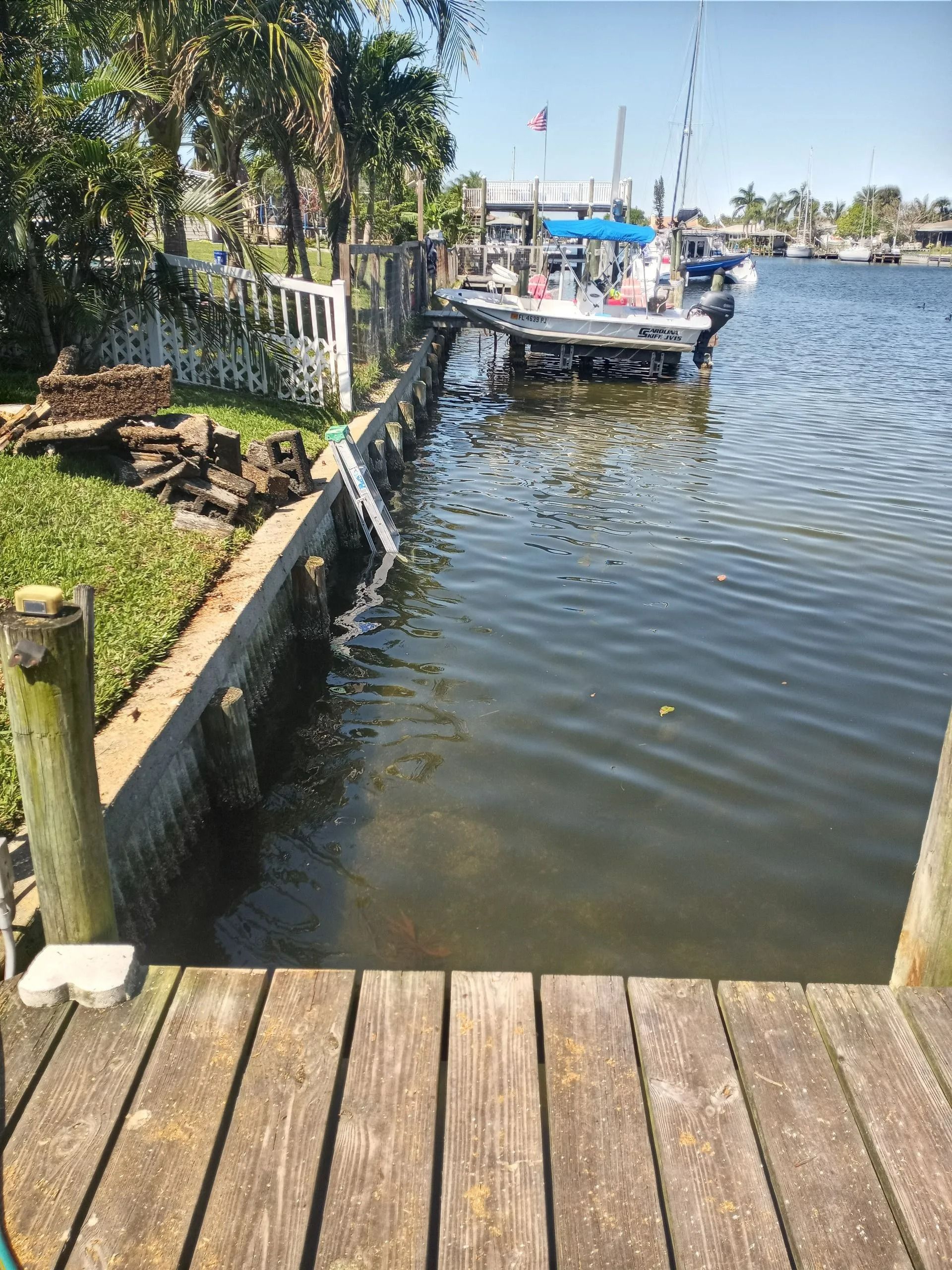
Details You Should Understand First
Homeowners planning riprap installations often ask how the stones are sized, whether the system requires maintenance, and how it compares to a traditional seawall in terms of cost and longevity.
What size stones are used for riprap seawalls?
Stone size depends on wave energy and slope, but most residential riprap uses stones between six inches and two feet in diameter. Larger stones are placed near the waterline where wave action is strongest.
How does riprap prevent erosion?
The stones absorb and scatter wave energy instead of reflecting it back into the water. This reduces the force hitting the shoreline and prevents soil from washing away. The filter fabric underneath keeps soil from migrating through the gaps between stones.
When should I choose riprap over a vertical seawall?
Riprap works well on properties with gentle slopes, moderate wave exposure, and space for a sloped bank. If your lot is narrow or the shoreline is steep, a vertical seawall may be more practical.
What maintenance does riprap require in Merritt Island?
You should remove debris and vegetation that grow between the stones, and check after storms to see if any stones have shifted or settled. Riprap generally requires less maintenance than timber or concrete seawalls because there are no joints or panels to crack or rot.
How long does a riprap shoreline last?
Riprap can last decades if properly installed, because the stone does not corrode or decay. The filter fabric may eventually break down, but the stones remain effective as long as they stay in place and the slope is stable.
Precision Docks & Seawalls installs riprap and rock seawall systems for waterfront properties in Merritt Island that need erosion control without the look or cost of a traditional vertical wall. Get in touch to review your shoreline and discuss stone options and installation scheduling.